In a globalized economy, transportation plays a decisive role in driving the competitiveness and profit margins of logistics enterprises. Continuous fluctuations in fuel costs, global supply chain uncertainties, and increasingly stringent market demands for delivery times are posing significant pressure on business executives.
To fundamentally address this challenge, cutting costs through manual methods is no longer highly effective. Businesses must transition to optimizing freight transportation with smart management systems. This is the core strategy to synchronize information flows, optimize resources, and comprehensively control operational costs.
1. Challenges in transportation management: bottlenecks in traditional operational methods
Many mid-to-large-sized enterprises still maintain fragmented management methods using Excel, chat groups, or outdated, localized desktop software. This lack of synchronization directly creates "data silos" and leads to several severe limitations:
- Information asymmetry and reactive responses: The lack of transit monitoring tools forces dispatch teams to constantly communicate manually to verify progress. When route incidents arise, information is not updated in a timely manner, causing delays in resolution and degrading the committed Service Level Agreement (SLA).
- Document misplacement and prolonged reconciliation cycles: Manual archiving of paper documents and physical Proof of Delivery (POD) is highly prone to misplacement. This complicates month-end debt reconciliation with customers and subcontractors, directly impacting the enterprise's cash flow.
- Inability to control actual costs: Businesses struggle to break down and accurately allocate incurred expenses (such as toll fees, fuel, and yard storage fees) to individual orders or trips. The absence of visual financial data prevents management from making precise service pricing decisions to safeguard target profit margins.
2. The core of smart freight transportation management systems
A smart transportation management system goes far beyond simple data logging. The essence of this solution lies in digitizing the entire operational workflow (end-to-end) and establishing a real-time information flow among shippers, dispatchers, field drivers, and the financial accounting department.
By consolidating data into a single unified platform, the system automates repetitive tasks, optimizes fleet allocation, and delivers in-depth analytical reporting to support management in making highly accurate, data-driven decisions.
3. How technology resolves transportation cost and performance challenges
To achieve effective freight transportation optimization, businesses must focus on three core pillars of solutions:
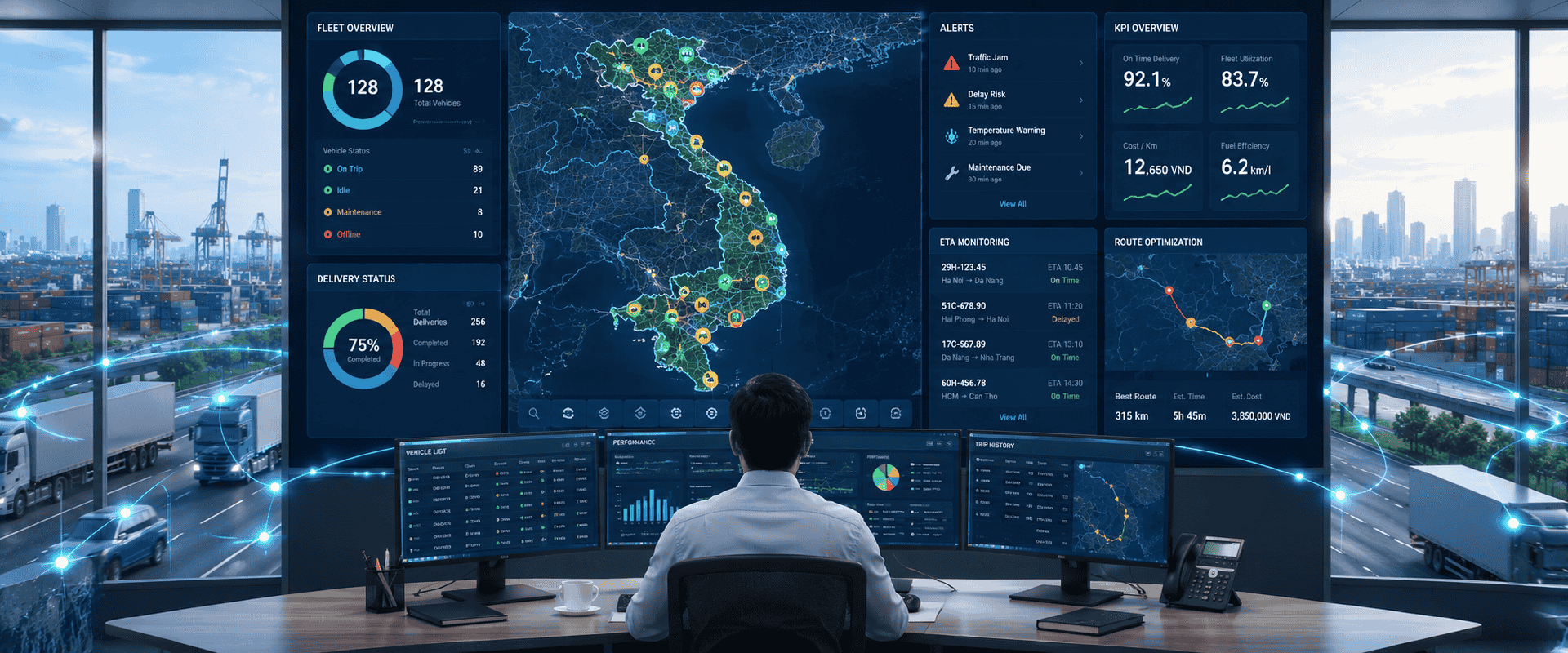
3.1. Process digitization and automated documentation
Transitioning physical transport documents (such as House B/L, Master B/L, Manifest, Invoice, and Packing List) entirely into digital formats helps eliminate up to 60% of manual processing time. Advanced technologies like AI OCR (artificial intelligence-powered optical character recognition) integrated into the system automatically extract data from bookings and bills of lading with absolute accuracy, minimizing human data entry errors.
3.2. Smart dispatching and route optimization
Intelligent management systems enable multi-stop order planning and smart shipment consolidation. Leveraging optimal routing algorithms, the system automatically assigns the most suitable vehicle based on payload capacity, volume, and transit routes, preventing empty backhauls or scheduling conflicts. Dispatch orders are sent directly to the driver's mobile application in real time, ensuring an uninterrupted flow of information.
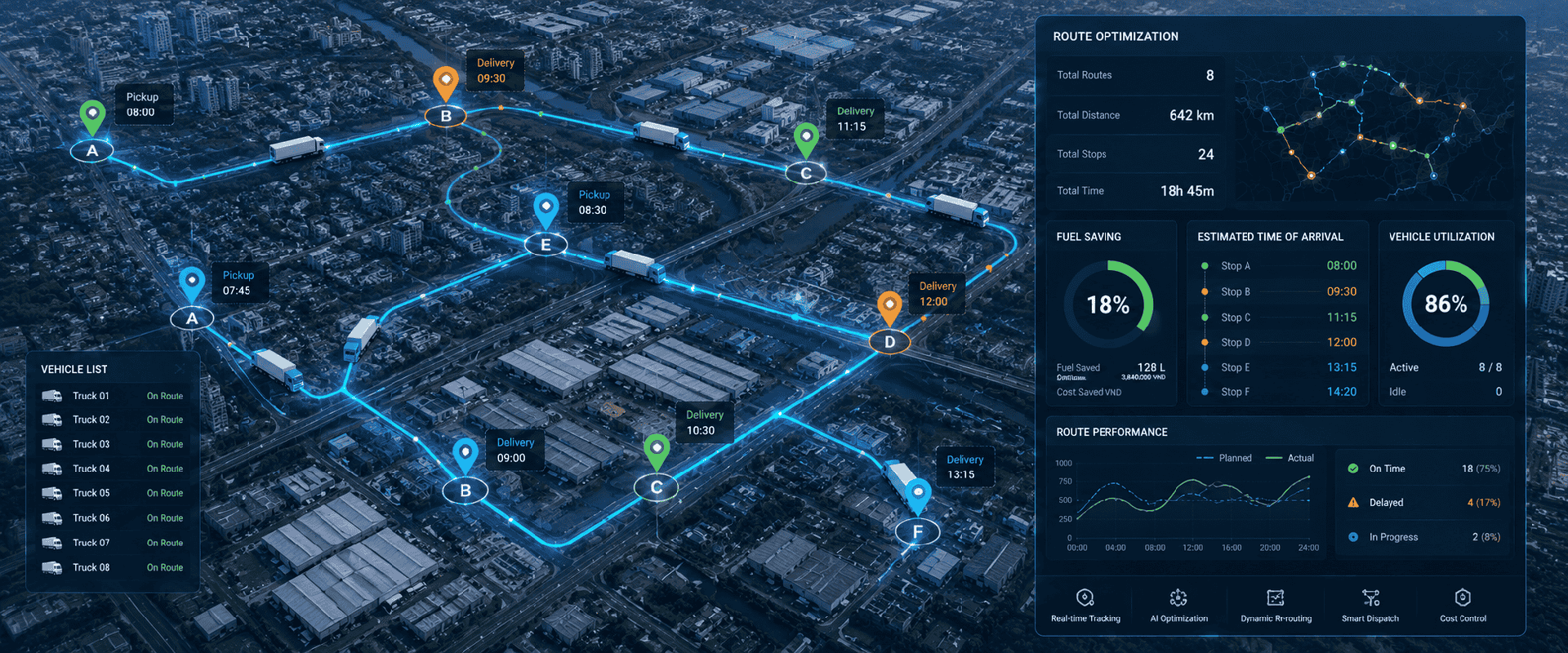
3.3. Financial control and real-time margin management (Real-time P&L)
The core of B2B management lies in financial transparency. Smart systems automatically link all on-road expenses (updated directly by drivers via mobile apps with attached receipt photos) to specific orders. Consequently, accountants can automatically generate Debit/Credit Notes, perform swift SOA reconciliations, and enable executives to monitor instant profit and loss (P&L) reports for each trip, route, or specific customer.
4. The trend of integrating specialized management ecosystems
Depending on whether an enterprise's scope of operations involves domestic road fleet transport or international freight forwarding and logistics services, choosing a specialized management tool is the deciding factor in investment efficiency.
To address this specific challenge, businesses today tend to adopt deeply modularized digital solutions from reputable providers such as Sota Solutions:
- For international logistics and freight forwarding operations: Implementing the Sota FMS module helps standardize the entire chain of complex international documents (House B/L, Master B/L, Manifest, Invoice). The system integrates AI OCR technology to support automated booking recognition, tightly connecting data from sales to operations and finance. This optimizes pricing management processes and enables efficient multi-currency debt tracking.
- For domestic transportation and fleet management operations: The Sota TMS module focuses on optimizing ground dispatch activities. This solution supports smart multi-stop order consolidation and real-time connectivity with drivers via mobile applications to update shipping statuses and upload Proof of Delivery (POD) photos. Concurrently, the system automatically and transparently controls cash advances, trip expenses, and subcontractor debt reconciliation.
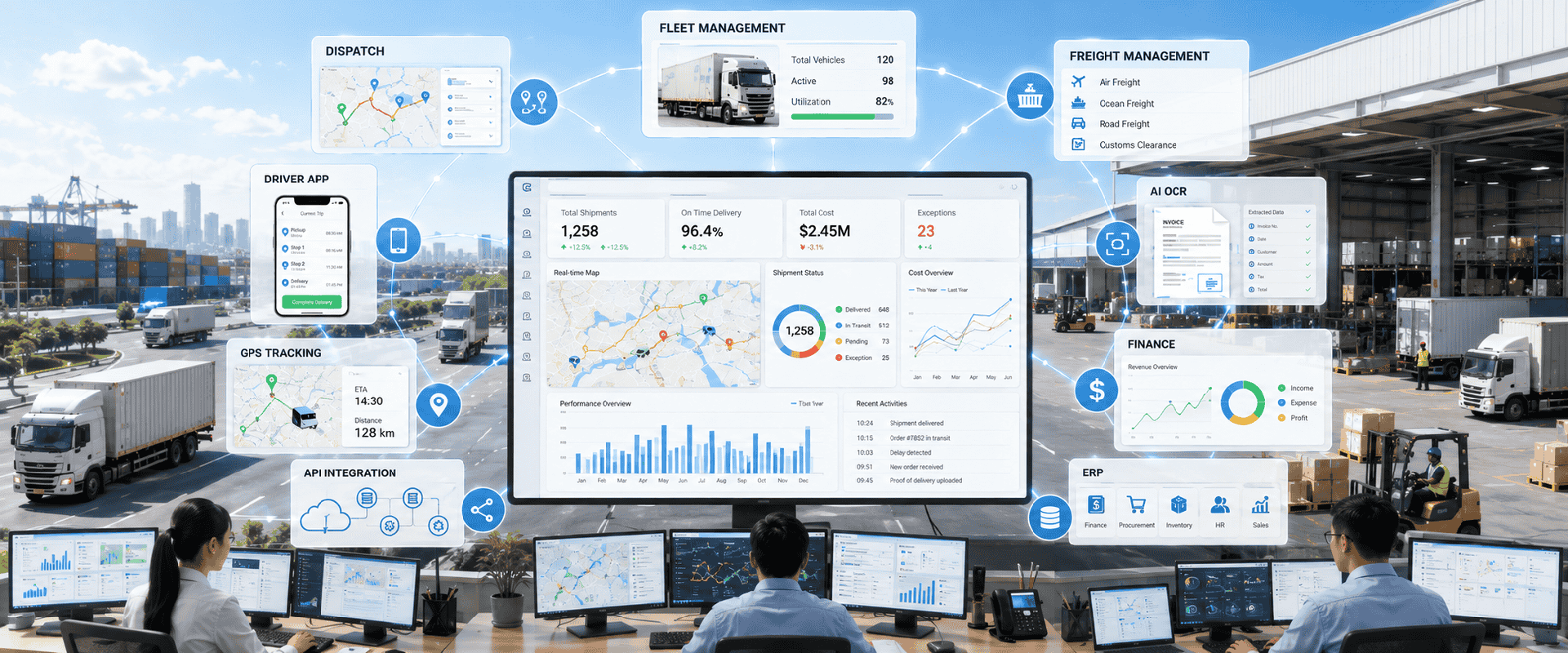
5. The digital transformation roadmap for logistics enterprises
Implementing an intelligent management system must follow a scientific roadmap to minimize the risk of operational disruptions:
- Process assessment and standardization: Review the entire current operational workflow to clearly identify the "bottlenecks" that cause the most significant waste of cost and time.
- Selection of flexible, modular solutions: Instead of a massive, all-at-once deployment, businesses should prioritize solutions that offer flexible integration and scalable expansion, such as the Sota Solutions ecosystem. This approach helps personnel adapt easily and optimizes the initial investment cost.
- Continuous training and measurement: Focus on digital capability training for all personnel, from office staff to field drivers. Establish clear Key Performance Indicators (KPIs) and Service Level Agreements (SLAs) to evaluate the actual efficiency delivered by the system.
Conclusion
Optimizing freight transportation through intelligent management systems is an inevitable solution for logistics enterprises to establish a sustainable competitive advantage. Deploying these specialized smart management systems provides a solid launchpad for businesses to completely eliminate ambiguous manual management methods, driving a powerful shift toward an operationally cost-optimized, financially transparent, and highly scalable business model.