When a fleet expands past 50 vehicles, logistics management undergoes a fundamental shift. Methods that once worked effectively for 10–20 trucks—such as direct phone calls, manual Excel tracking, or Zalo chats—instantly hit a wall. Dispatchers become overwhelmed, operational errors spike, and leadership is left without the real-time data needed to make timely decisions.
This article breaks down the root causes of dispatcher overload and provides a structured management roadmap to help transport companies scale seamlessly while maintaining absolute operational control.
Why large fleets easily fall into dispatch overload
Dispatch overload is not simply a matter of lacking staff. It is the inevitable result of information volume multiplying exponentially while management tools remain stagnant.

- Fragmented data: Information regarding orders, vehicles, and drivers is scattered across Excel sheets, text messages, and paperwork. Dispatchers waste hours every day just gathering and reconciling data instead of focusing on route optimization and resource allocation.
- Reactive dispatching: Without a real-time status update system, dispatchers must constantly call drivers to ask, "where are you now?". This manual approach is both time-consuming and prone to errors when a single person has to track dozens of trips simultaneously.
- Lost documentation: Proof of delivery (POD) receipts and expense invoices are easily lost or delayed, turning end-of-month reconciliation into a nightmare that drags on for days.
- Lack of financial transparency: It is incredibly difficult to know exactly whether each trip, route, or subcontractor is profitable or running at a loss. When you cannot measure it, you cannot optimize it.
With a fleet of 50+ vehicles, each of these weaknesses is no longer a minor inconvenience—it becomes a critical bottleneck that paralyzes the entire operation.
Large-Scale fleet management strategies to avoid overload
To break free from the cycle of operational overload, businesses need to build a management system anchored by the following four pillars:
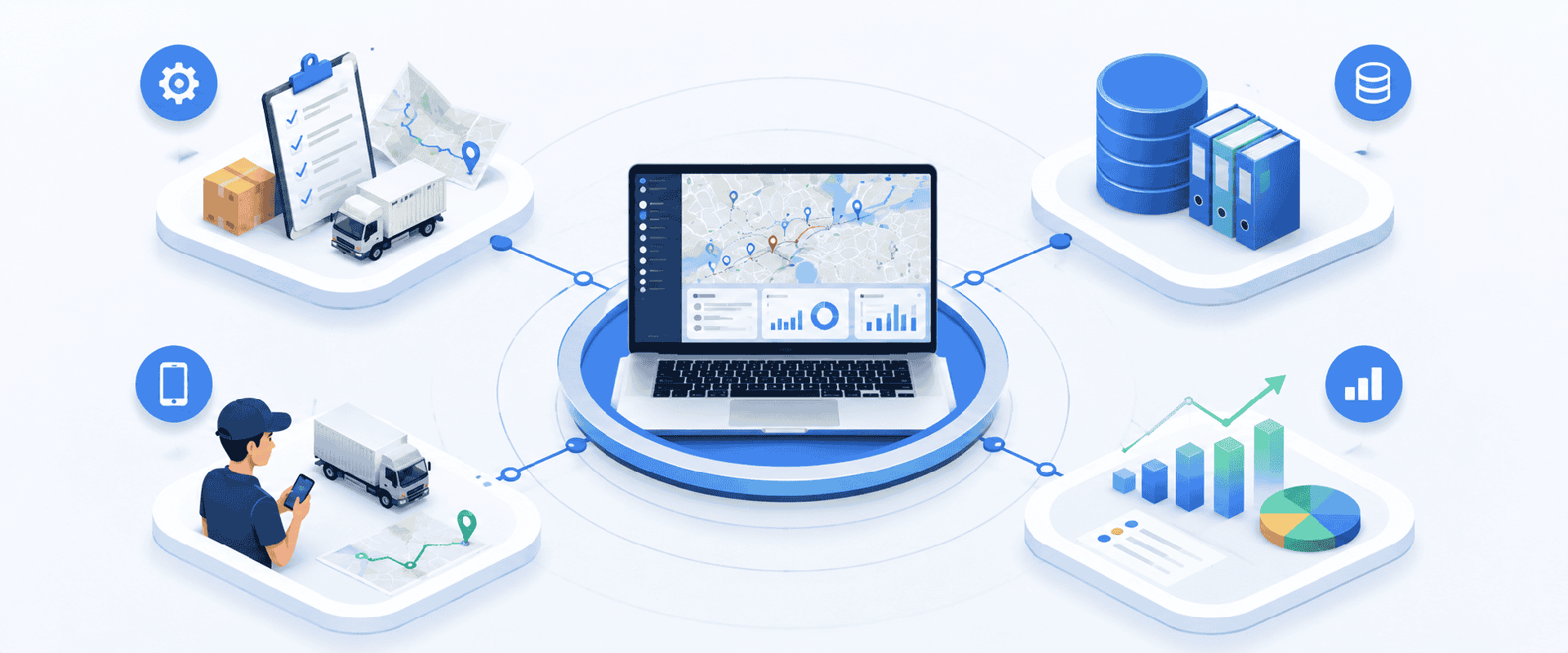
1. Process standardization and digitalization
The first step is to bring the entire workflow into a unified standard: from order ingestion, route planning, and vehicle assignment, to delivery confirmation. When processes are digitalized, all input data is consistently formatted, reducing reliance on the memory or personal experience of individual dispatchers.
Standardization also allows businesses to onboard new staff smoothly and maintain consistent service quality while scaling up.
2. Data centralization into a single source of truth
Instead of letting data sit in silos, businesses need a single "control center" that integrates vehicle profiles, driver data, subcontractor capacities, and all order details. When every department operates on the same single source of truth, information discrepancies are virtually eliminated, giving dispatchers a holistic view to make faster decisions.
3. Real-time connectivity between office and drivers
The information gap between dispatchers and drivers is the root cause of most unnecessary phone calls. A dedicated mobile app for drivers enables them to receive dispatch orders, update trip statuses, capture POD photos, and report incidents directly on their phones. As a result, the back office stays updated on real-time progress without continuous calling.
4. Data-driven performance measurement
Effective management requires intuitive dashboards and detailed profitability reports for each trip, route, or sales representative. When all metrics are displayed in real time, management can easily detect underperforming routes, underutilized vehicles, or abnormal expense spikes early on.
Transportation management software: the ultimate leverage
The four pillars mentioned above can only unleash their full potential when integrated into a unified technology platform. This is exactly where a transportation management system (TMS) becomes an indispensable asset for businesses with 50+ vehicles.
A modern TMS automates repetitive manual tasks, supports multi-stop route planning, enables smart trip consolidation, and flags scheduling conflicts instantly during resource allocation. Instead of relying on error-prone manual dispatching, businesses shift toward a proactive, data-driven operational model.
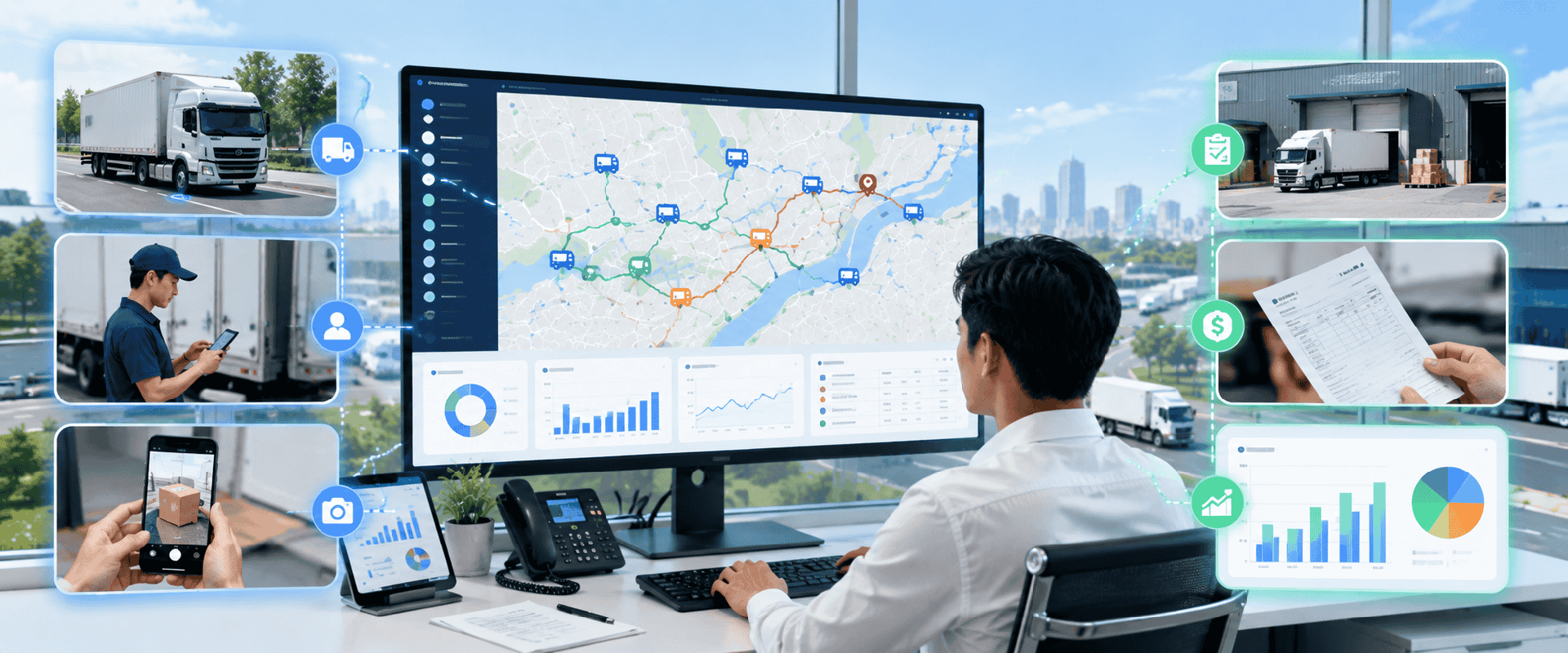
In Vietnam, Sota TMS by Sota Solutions stands out as a smart transportation management software purpose-built for the domestic logistics industry. Sota TMS empowers businesses to transition from fragmented operations to a centralized dispatch hub through its core feature sets:
- Smart dispatch management: Plans multi-stop routes, consolidates multiple orders into a single trip, automatically pushes dispatch orders to the driver app, and alerts users of scheduling conflicts.
- Driver mobile app: Allows drivers to receive orders, update statuses, capture digital PODs, and report incidents in real time.
- Fleet and subcontractor management: Digitalizes vehicle profiles, tracks inspection deadlines, and monitors third-party capacity and outsourcing costs.
- Financial transparency: Delivers granular profitability reports by trip, route, and partner while automating cash on delivery (COD) and accounts receivable reconciliation.
As a digital transformation partner with over 20 years of experience, 500+ successful projects, and a 98.9% customer satisfaction rate, Sota Solutions does not just deliver software—they walk alongside businesses throughout their operational digitalization journey.
A Phased implementation roadmap
Businesses do not need to overhaul everything overnight. An effective roadmap typically begins with digitalizing vehicle and driver data, followed by standardizing dispatch workflows, and eventually expanding into financial management and advanced reporting analytics. This step-by-step approach allows the team to adapt gradually, minimizing the risk of operational disruptions.
Conclusion
Managing a transport company with 50+ vehicles without facing dispatch overload is entirely achievable—provided that the business shifts from manual management to centralized, data-driven operations. Standardizing workflows, digitalizing information, establishing real-time connectivity, and measuring performance via dashboards are the ultimate keys to keeping a large fleet running smoothly.
If your business is searching for a structured solution to break free from dispatch overload, schedule a Sota TMS demo with Sota Solutions today to experience how a smart transportation management platform can transform your fleet into a lean and transparent operating system.