At 2:00 p.m., a customer calls to ask where today’s shipment is. The dispatcher cannot answer right away. The driver is not picking up, the last recorded status is from this morning, and accounting is still waiting for the documents from yesterday’s trip. This situation is common among transport companies that still manage shipments through spreadsheets, text messages, and phone calls.
The cause is not whether a company has data, but when that data reaches the people making decisions. This article explains why real-time transport data has become an operational requirement, and which criteria business owners should consider before implementing it.
What is real-time data in transport?
Real-time data is data that is recorded, transmitted, and displayed almost as soon as an event occurs, with a delay measured in seconds or minutes rather than by shift or by day. Updates can arrive within seconds, allowing decisions to be made proactively.
In transport, this data falls into three main groups:
- Vehicle data: location, speed, and vehicle status, collected through GPS, IoT, and telematics.
- Order data: the status of each pickup and delivery point, and proof of delivery (POD).
- Trip financial data: fuel, tolls, parking, and subcontracting costs.
Vehicle tracking is only one part of the picture. Real-time data delivers management value when vehicle location, orders, and costs are linked within a single system.
The consequences of delayed transport data
Many companies still manage shipments through spreadsheets, messaging apps, and paper documents. This leads to three consequences:
- Reactive dispatching. Dispatchers must call each driver to learn their location and progress, so decisions on vehicle assignment or schedule changes are often based on outdated information.
- Late consolidation of documents and costs. Lost PODs, missing invoices, and prolonged month-end reconciliation delay the collection of receivables.
- Profit is known only after a trip ends. By then, the company can no longer make adjustments.

Why transport companies need real-time data: 5 reasons
1. Proactive dispatching, with less idle time and fewer empty runs
When vehicle location and status (available, assigned, en route, under maintenance) are displayed instantly, dispatchers can assign trips to the vehicle closest to the pickup point, consolidate orders, and handle incidents immediately. Real-time tracking allows routes to be changed and delivery schedules to be optimized flexibly, for example by avoiding congested roads. The result is more trips per vehicle and fewer confirmation calls.
2. Control over costs and profit on every trip
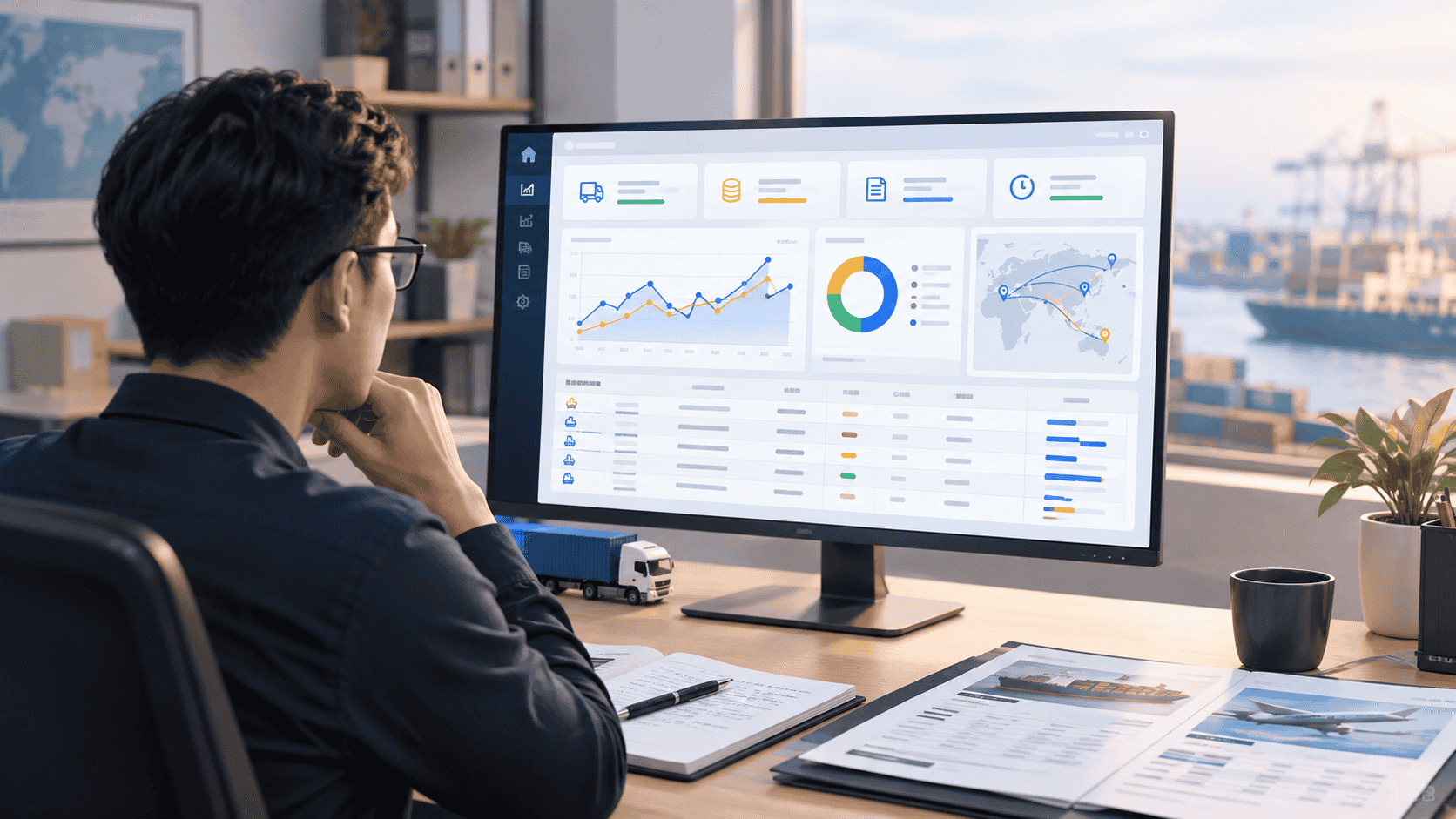
Trip costs consist of many items incurred along the route. When each cost is recorded immediately with supporting documents, a company can identify low-margin trips, routes, or customers within the operating cycle rather than waiting until month-end. According to the Central Institute for Economic Management (CIEM), informal costs account for 5% to 10% of transport costs. These costs are harder to control when a company lacks detailed data for each trip. Timely data also provides a basis for adjusting the freight rates quoted to customers.
3. Transparent information for customers
Shippers increasingly expect to know the location of their cargo, the estimated delivery time, and proof of delivery. This transparency increases customer trust and satisfaction with logistics services. Real-time data lets a company notify customers of delays before they have to ask. Electronic POD also shortens the time needed for reconciliation and invoicing.
4. Safety and compliance with vehicle monitoring regulations
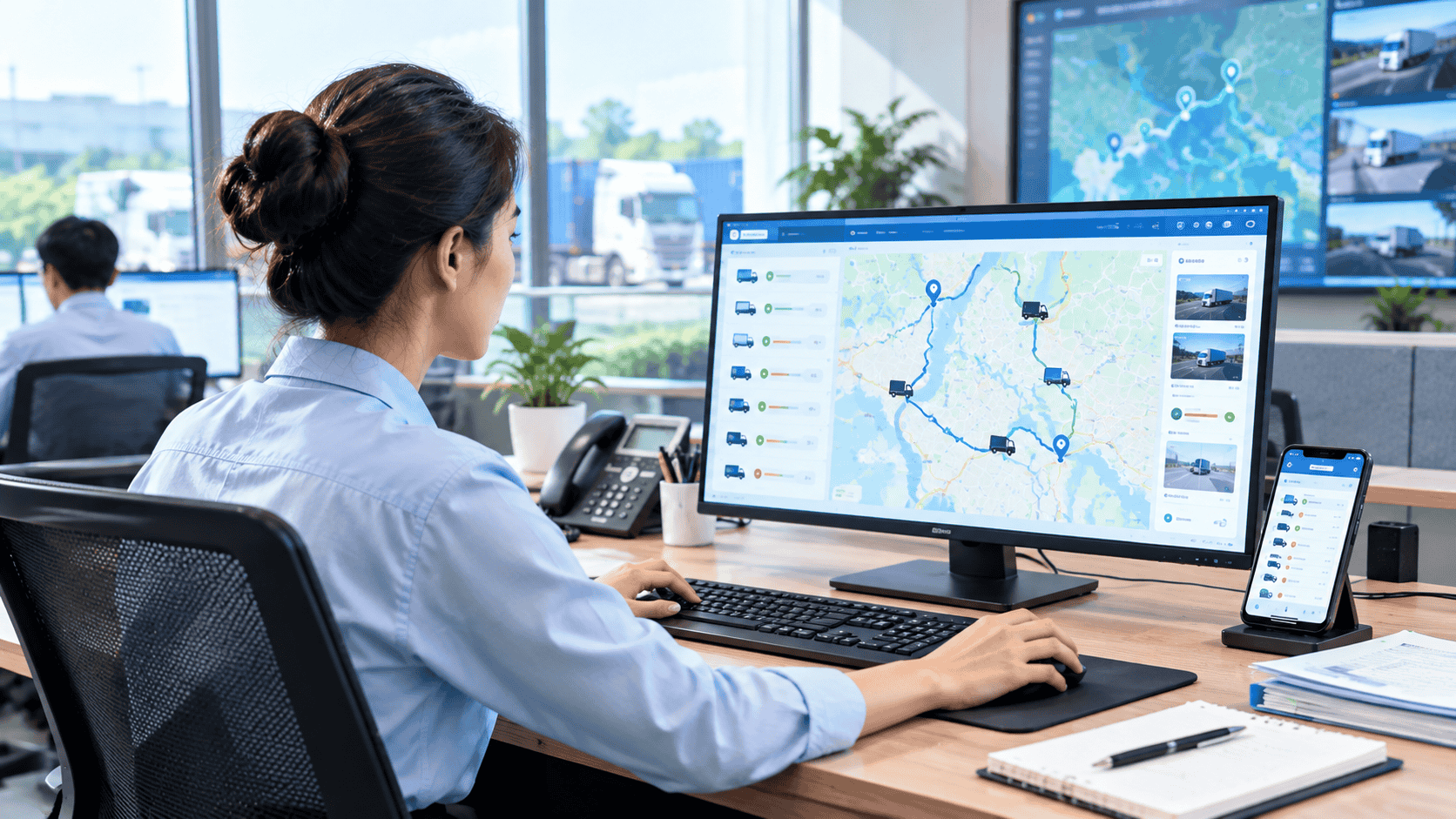
Decree 158/2024/ND-CP requires commercial transport vehicles to be fitted with a vehicle tracking device and a device that records images of the driver. Data from these devices is connected to the Traffic Police Department under current regulations. Regulators review this data to detect violations such as speeding, exceeding continuous driving time, and failing to transmit data.
Transport companies are responsible for managing their vehicles and drivers. Learning of these violations only after the authorities notify them is too late. Real-time data makes it possible to detect and alert drivers as events occur, and also reduces accident risk.
5. Effective management of subcontracted fleets
Nearly 70% of Vietnamese logistics companies are asset-light, and most vehicles and warehouses are outsourced. Many businesses operate a hybrid model combining their own vehicles with subcontractors. When the trip status and costs of subcontracted vehicles are updated in the same system as in-house vehicles, reconciliation becomes more accurate and the company has a basis for comparing subcontractor performance.
Sota TMS: Real-time data updates, accessible anytime, anywhere
Real-time data is valuable only when it is collected at the source and centralized on a single platform. The transport management software Sota TMS s built with this approach. Drivers use a smartphone app to receive dispatch orders, update trip status, capture POD photos, report incidents, and enter expenses along the route. Data is synchronized to the system as soon as it is updated.
From this data source, each department works with the same information:
- Dispatch: monitors vehicle status and trip progress to respond in time.
- Sales: provides customers with a link to track their shipments. The system can also send status updates automatically by email.
- Accounting: receives trip documents and costs for receivables reconciliation.
- Management: views dashboards of transport status and profit-and-loss reports by trip, route, or sales representative.
Because data is updated continuously and can be accessed anytime, anywhere, business owners stay informed about operations without relying on manually compiled reports.
Criteria for choosing a real-time data solution
Before implementation, companies should evaluate solutions against the following criteria:
- Data latency: the time from when an event occurs to when it appears in the system.
- Field data sources: whether drivers can update status, documents, and costs from a smartphone.
- Degree of integration: whether vehicle location, orders, costs, and revenue sit in the same system. The ability to integrate with ERP and TMS is an important requirement for real-time tracking systems.
- Management reporting: dashboards and profitability reports by trip, route, and customer.
- Scalability and implementation support: suitability for the current fleet size and for future growth.
Conclusion
Real-time transport data helps companies dispatch proactively, control costs trip by trip, be transparent with customers, comply with vehicle monitoring regulations, and manage subcontractors based on figures. When transport accounts for a large share of logistics costs, the speed of access to data directly affects business performance.
Business owners interested in a transport management solution can learn more, request a consultation, or start a trial on the Sota TMS.