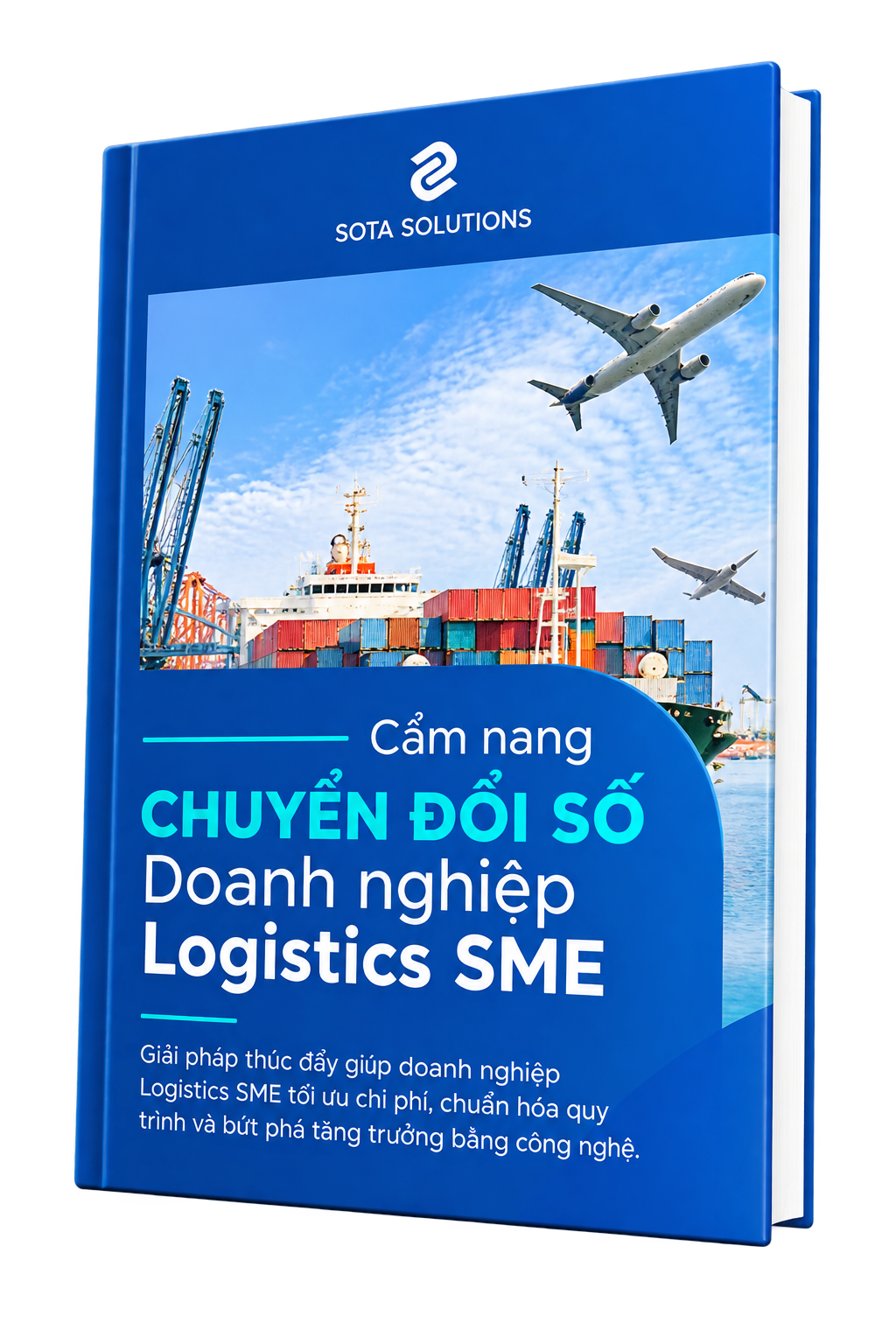
A DIGITAL TRANSFORMATION HANDBOOK FOR LOGISTICS SMEs
Practical solutions to help Logistics SMEs optimize costs, standardize processes, and achieve breakthrough growth through technology.
Ebook Overview
Vietnam’s logistics industry presents a paradox: domestic enterprises (SMEs) account for as much as 80% of all companies by number, yet hold only about 30% of the market share. The root cause lies in manual management methods that depend on individual experience and fragmented data. This approach results in low operational efficiency, and as a company scales up, its profits actually become thinner. Digital transformation is therefore no longer an option but a matter of survival, yet more than 90% of businesses are still at the starting stage. This is precisely the opportunity for those who adopt technology early to achieve a breakthrough.
Digital transformation is not a race of budgets, but a race of mindset and the ability to choose the right solutions that fit the resources at hand. This handbook has been compiled to help logistics SMEs correctly identify the barriers holding them back and build a realistic, feasible digital transformation roadmap. Rather than chasing expensive technology, we work alongside you to choose the right partners and solutions, so that digital transformation becomes a tool for optimizing operations, helping your business grow steadily and sustainably in the new era.
Operational challenges of Logistics SMEs
Vietnam’s logistics market still has plenty of room for growth. However, the biggest barrier for small and medium-sized enterprises lies not in market opportunities, but in their internal management and operational capabilities.
Fragmented, decentralized operational data
Information is scattered across paper documents, Excel spreadsheets, and personal files, making it difficult to get a comprehensive view of business operations.
Rising revenue but thin profits
Manual management increases errors and cost leakage as shipment volumes grow, making it hard to determine profitability for each individual shipment.
Growing competitive pressure
Foreign enterprises with large scale, modern technology, and superior financial capacity hold nearly 70% of the market share.
Non-standardized, unsynchronized processes
Each department and each employee handles tasks in their own way, which weakens coordination among sales, operations, documentation, warehousing, and accounting.
Decision-making that relies on personal experience
Without real-time reports, it is difficult to make timely, data-driven decisions, and management depends on the experience of a few key individuals.
Half-finished, ineffective digital transformation
Leaders are cautious, staff are reluctant to change, it is hard to choose the right solutions, and the investment costs are high.
What should Logistics SMEs do to overcome these challenges and achieve successful, effective digital transformation?
Table of contents
An overview of Vietnam’s logistics industry, where SMEs account for 80% of companies by number but hold only about 30% of the market share, and why digital transformation has become an inevitable requirement.
According to the Vietnam Logistics Report 2024, 90.5% of businesses are still in the early stage of digitalization, and the industry is divided into 4 groups based on their level of digital transformation.
Five common barriers: leadership awareness, non-standardized processes, staff resistance, choosing the wrong solution, and budget constraints.
An 8-step roadmap, from defining objectives, selecting a partner, training, and pilot running to official operation and continuous improvement, along with key considerations for project success.
An introduction to Sota FMS (a specialized ERP) and Sota CRMlog (an AI-integrated CRM), as well as a model combining both solutions to enable seamless data flow from customer to profit.
Six real businesses that have implemented Sota FMS or Sota CRMlog, including their challenges, solutions, and the results achieved.
Which businesses is this document suitable for?
 Logistics businesses that still manage operations manually, mainly using Excel, Google Sheets, or paper documents.
Logistics businesses that already have a software system but one that does not properly meet Logistics-specific operational needs.
Businesses that plan to invest in professional digital transformation but do not know where to start.
Businesses that have previously implemented software but did not achieve the expected results or incurred high costs.

Download for Free
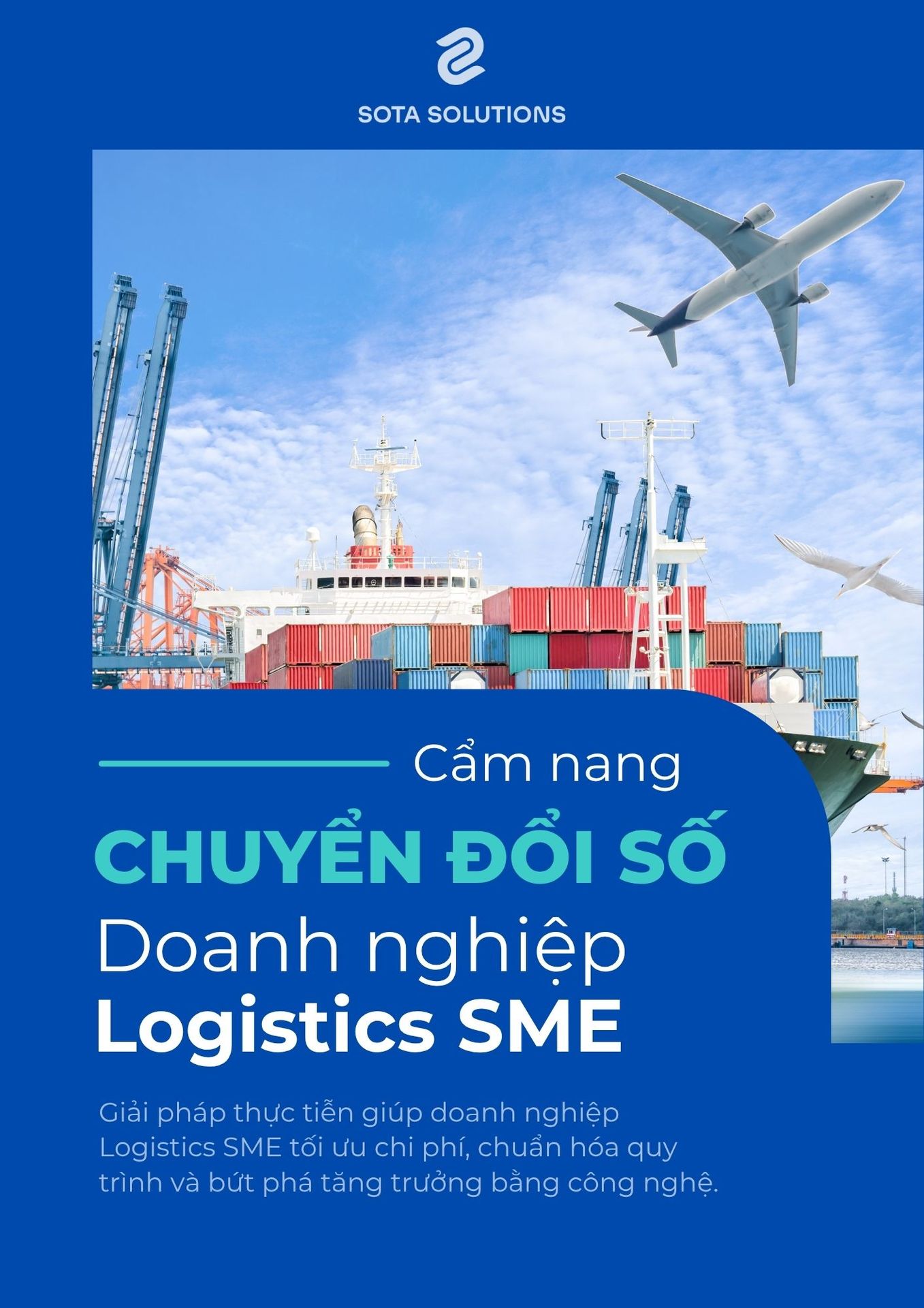
Ebook: A Digital Transformation Handbook for Logistics SMEs
Practical solutions to help Logistics SMEs optimize costs, standardize processes, and achieve breakthrough growth through technology.