Entering 2026, Vietnam's transport and logistics industry is witnessing profound structural transformations. Data from the latest quarterly market reports indicates that total freight volume continues to maintain double-digit growth. However, accompanying the market expansion opportunities is the pressing challenge of rising fuel costs, labor expenses, and stringent regulatory requirements regarding supply chain data transparency.
In this context, technological adoption is no longer just an "optimal choice" but has become a "matter of survival." While a Transportation Management System (TMS) was once considered an exclusive privilege of large multinational corporations, in 2026, it has become an indispensable tool for small and medium-sized transport enterprises to sustain their competitive advantage.
Below are 5 core reasons why your transport business needs to aggressively invest in a TMS this year.
1. Digitalization of logistics data has become a regulatory mandate
The year 2026 marks a major turning point as government policies tighten regulations on document digitalization, route data declarations, and transport cost transparency. Manual management via paper logbooks, Excel sheets, or fragmented chat groups is no longer sufficient to meet legal compliance standards.
- Risks of Legacy Systems: A lack of data integration among dispatchers, drivers, and accountants leads to document discrepancies, as well as delays in tax settlements and financial reporting.
- The Value of a TMS: Standardized transportation management software automates the entire data workflow—from order receipt and route planning to the digitalization of invoices and electronic Proof of Delivery (e-POD).
Mastering real-time digital data enables businesses to easily adapt to spot checks by authorities, minimize legal risks, and build absolute trust with major shippers (B2B clients) who prioritize data transparency above all else.
2. Escalating operational cost pressures – Route optimization is the only way forward
Fluctuations in fuel prices, combined with rising toll fees and vehicle depreciation during the first half of 2026, are eroding the profit margins of many transport operators. Businesses cannot increase freight rates arbitrarily due to fierce market competition; therefore, internal optimization is the only viable solution.
A TMS solves this challenge through advanced Route Optimization algorithms:
- Load and Distance Optimization: It automatically calculates the shortest routes, avoids weight-restricted or congested roads, and consolidates multi-stop deliveries onto a single journey to maximize truck capacity utilization.
- Minimizing Empty Backhaul Rates: By linking headhaul and backhaul data, dispatchers can swiftly match less-than-truckload (LTL) or combined shipments, eliminating the waste of fleet resources.
Real-world implementations across numerous enterprises demonstrate that adopting a TMS helps reduce unnecessary mileage by 10% to 15%. This directly cuts down on fuel expenses—the largest cost component in transport operations.

3. Solving the shortage and management of specialized operational personnel
According to 2026 logistics human resource reports, the scarcity of high-level talent and tech-savvy labor is a major bottleneck for the industry. As fleet sizes expand, sticking to legacy management methods will trap businesses in an "administrative staff explosion"—increasing headcount merely to handle recurring issues rather than boosting actual productivity.
Investing in transportation management software helps liberate labor and automate workflows:
- Alleviating the Burden on Dispatchers: The system automatically allocates orders to drivers based on location, vehicle type, and real-time availability, eliminating the need for dispatchers to call each driver individually.
- Digitalizing Driver Interaction: Through a mobile application integrated with the TMS, drivers receive dispatch orders, update delivery statuses, and report en-route incidents with just a few taps.
This automated process reduces manual task processing time for the office department by up to 60%, allowing enterprises to operate a fleet twice its original size without the need to hire additional back-office administrative staff.
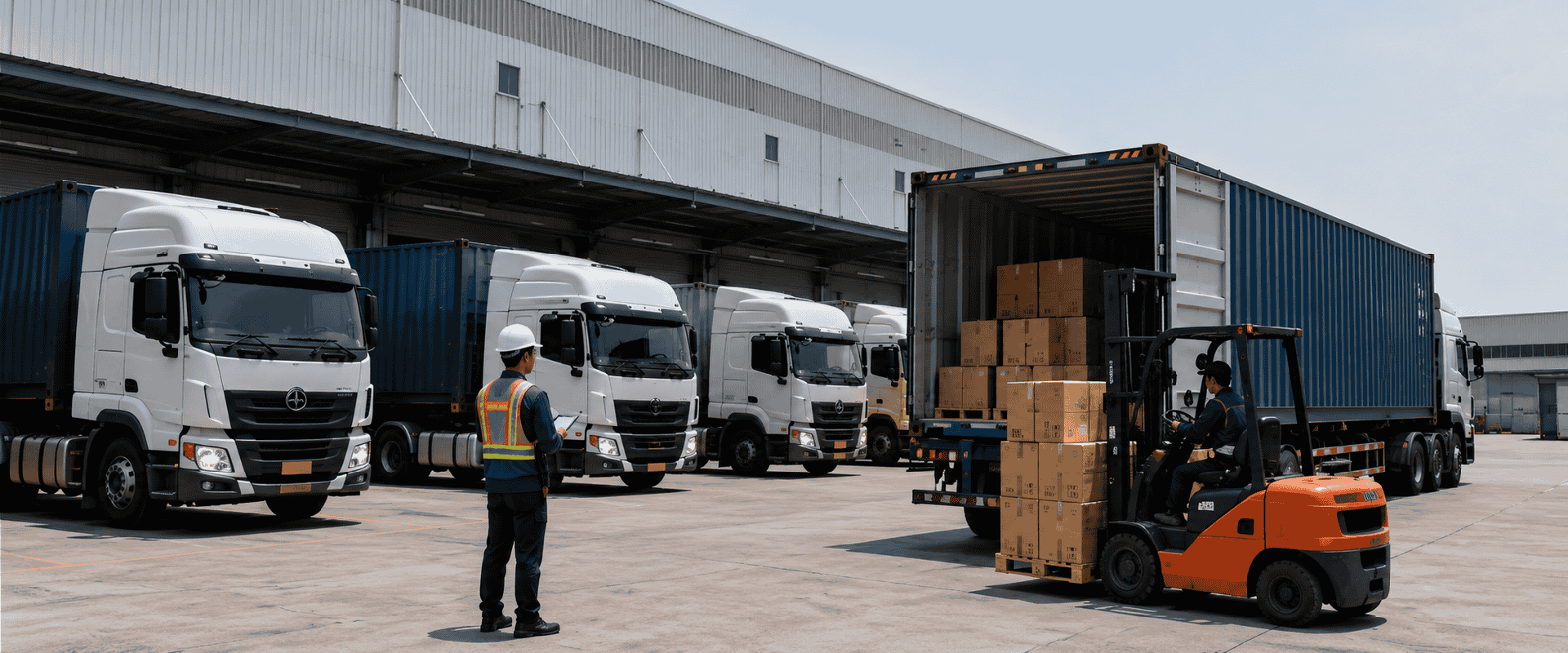
4. Enhancing B2B customer experience with real-time visibility
In modern supply chains, shippers are no longer just concerned about whether goods arrive safely; they demand the right to know: Where is the shipment? When will it arrive? Who is transporting it?
If transport companies continue to respond to clients manually with phrases like, "Let me call the driver and get back to you," they will inevitably be phased out of the premium customer segment. A TMS delivers comprehensive supply chain visibility:
- Real-Time Tracking: Integrated GPS tracking allows both the transport company and shippers to monitor the precise location of vehicles on a digital map.
- Automated Alerts: The system automatically sends SMS or email notifications to customers when a vehicle is approaching a delivery point or when unexpected external disruptions cause delays.
This transparency and proactivity significantly elevate service experiences, turning technological capability into a Unique Selling Proposition (USP) that helps your business successfully win lucrative logistics tenders from multinational corporations and FDI enterprises.
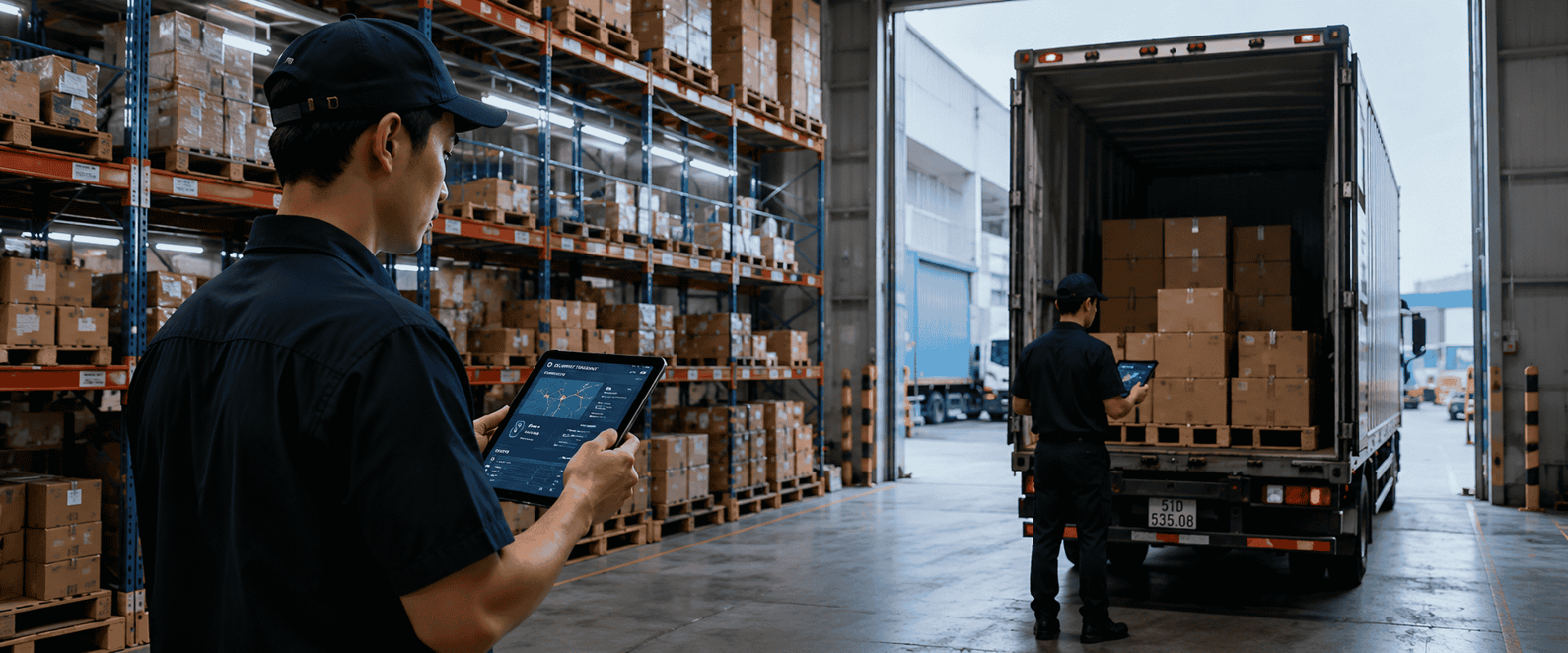
5. Unlocking the power of data for accurate strategic decision-making
A common mistake among traditional transport business owners is operating based on "experience" and "gut feeling." With the rapid market volatility in 2026, the lack of visual analytics can easily lead to flawed investment decisions (such as purchasing the wrong vehicle types or exploiting unprofitable routes).
A TMS acts as the "brain" that collects and analyzes operational data:
Core management metrics on TMS | Benefits for business owners |
Asset Utilization | Clearly identify which vehicles are operating at maximum capacity and which have been idle in the yard for too long. |
Detailed cost reports per vehicle | Precisely break down fuel costs, maintenance, and driver wages per kilometer. |
Driver KPI Evaluation | Track on-time delivery rates, safe driving behavior, and actual fuel consumption. |
Route Profit Margin Analysis | Pinpoint exactly which routes generate the highest profits to effectively focus resources. |
From this intuitive reporting system, corporate leadership gains a comprehensive overview to devise restructuring strategies, fleet optimizations, or market expansions with scientific approach and absolute precision.
Sota TMS: Smart transportation management solution for business breakthroughs in 2026
Understanding the core challenges and urgent market demands, Sota Solutions – a leading and highly reputable provider of specialized enterprise management software – has researched and developed the Sota TMS solution. This is a smart transportation management software tailor-made to completely resolve the unique operational puzzles of Vietnam's domestic transport sector.
Sota TMS — a smart transportation management platform is built upon the actual operational practices of hundreds of Vietnamese logistics enterprises. From road transport companies and last-mile delivery providers to large-scale 3PLs, Sota TMS delivers a comprehensive toolkit: route optimization, fleet management, real-time tracking, cost control, and in-depth analytical reporting.
Partnering with Sota Solutions, transport businesses are not just purchasing software; they are acquiring a comprehensive digital transformation consultancy roadmap from a team of experts with rich international experience, helping to standardize processes and build a solid foundation for long-term growth.
Conclusion
2026 is not the year to "learn about" TMS—it is the year to act. Operational costs continue to rise, customer expectations are higher than ever, and the gap between digitalized businesses and non-transformed ones will become increasingly difficult to bridge.
Transport enterprises that invest in a TMS early on will reduce costs, improve service quality, manage risks better, and build a data foundation for sustainable growth. This is not a theory—it is a reality proven by thousands of logistics companies worldwide and a growing number of Vietnamese businesses.
Are you looking for the right transportation management software solution for your business? Contact Sota Solutions today for a free consultation and experience a demo of Sota TMS—the smart transportation management platform tailored specifically for Vietnamese enterprises.