Driver management and subcontractor networks consistently account for a major share of operational costs in a professional transportation business, directly affecting the profit margins of the entire system. Yet, most executives today face a stark reality: the information flow of this dispersed workforce is managed through manual, fragmented, and uncoordinated methods. As fleet sizes grow, traditional approaches like Excel spreadsheets, paper logs, or casual messaging apps instantly expose significant control vulnerabilities.
A sustainable operational system cannot rest on fragmented information. To stay competitive in the modern supply chain, digitally transforming the driver and subcontractor management model is no longer a technological choice—it has become a strategic mandate for transport business owners. The emergence of specialized solutions, such as transportation management software (Sota TMS), provides the definitive key to reshaping this management capability.
1. Bottlenecks in the traditional driver management model
Before adopting technological solutions, managers must directly address the hidden losses caused by manual administration processes:
- Legal risks from loose paperwork control: Tracking expiration dates for driver's licenses and professional certificates for hundreds of drivers using manual methods is highly error-prone. A single oversight that allows a driver to operate a vehicle with expired documents can lead to hefty administrative fines or even vehicle impoundment. This disrupts delivery schedules and severely damages the brand's reputation with partners.
- Imbalance in trip distribution: The lack of visual, real-time data on drivers' actual availability results in inefficient shift scheduling. Dispatchers cannot clearly see who is ready or who is currently en route, leading to overworking one group of drivers while another remains idle, wasting valuable resource capacity.
- Difficulties in controlling subcontractor performance: When freight volume exceeds internal fleet capacity, outsourcing becomes inevitable. However, without a dedicated tool to store history and evaluate subcontractor performance, businesses will struggle to control and maintain the service level agreements (SLAs) promised to customers.

2. Restructuring driver management capabilities via transportation software
Understanding the unique challenges of the transportation industry, professional transportation management software solutions today focus on optimizing the driver and subcontractor management module. This solution helps businesses standardize all data, automate monitoring workflows, and maximize the performance of every workforce link.
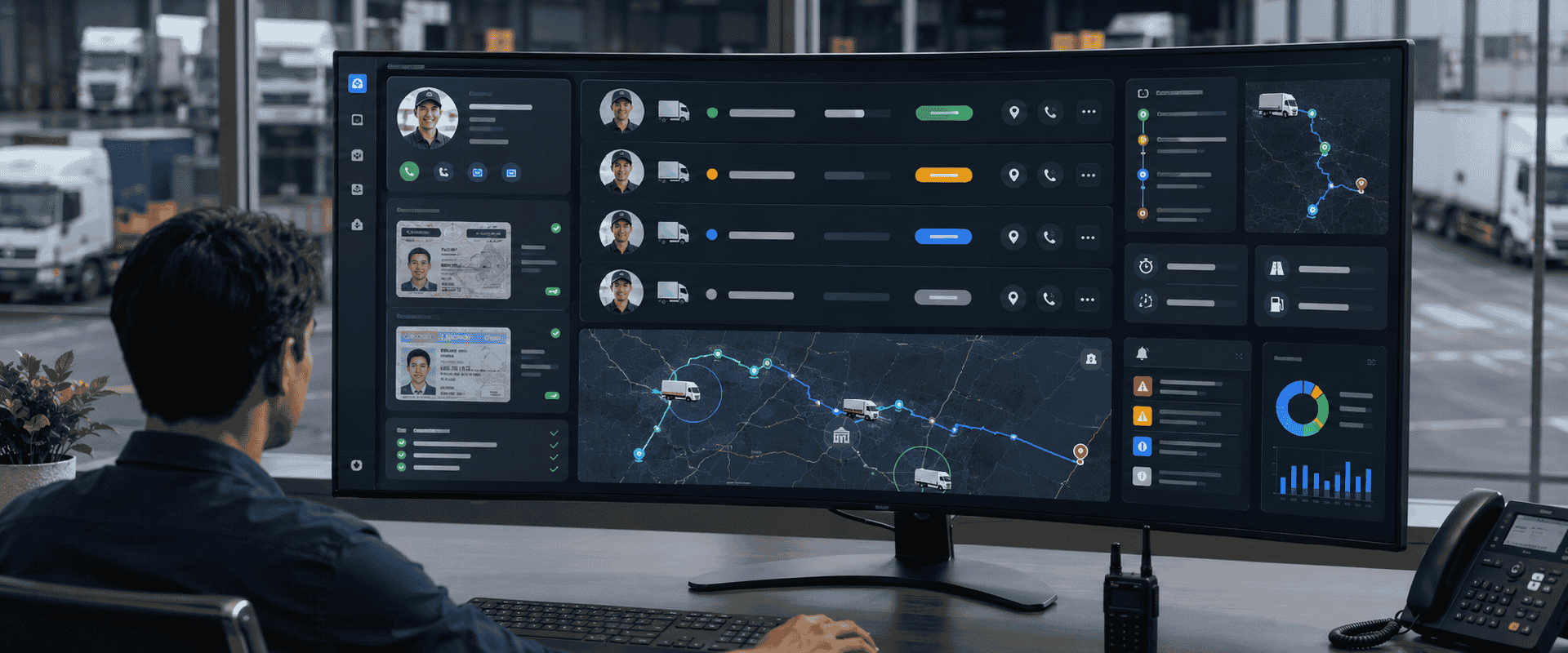
Digitizing and synchronizing driver profiles
Digital systems completely eliminate physical paper files. The software enables centralized storage of all critical driver data, including full names, ID/passport numbers, and direct contact phone numbers. Notably, the advanced document management submodule allows detailed updates on driver's license classes, issuance dates, and expiration dates. The system automatically triggers early alerts before these legal documents expire, helping businesses proactively manage HR and eliminate 100% of roadside legal risks.
Real-Time status tracking
One of the core features driving a breakthrough in operational workflows is the ability to transparently track driver status in real time. The dispatch dashboard visually displays various statuses, including:
- Available: Ready to receive new dispatch orders.
- Assigned: Task received and preparing the vehicle.
- In-transit: Currently executing the delivery route on the road.
- Off-duty / Inactive: Drivers on shift breaks or vehicles undergoing maintenance.
Based on this status matrix, the dispatch department can make accurate routing decisions in just a few clicks, minimizing empty miles and optimizing fleet labor productivity.
Flexible resource structural classification
Every large transportation enterprise operates a hybrid workforce model to optimize costs. The system supports setting up and classifying drivers into three distinct groups: Internal, Vendor, and Contract. This transparent classification allows the system to automatically apply distinct mechanisms for salaries, bonuses, allowances, or cost benchmarks to each specific group, minimizing the workload for the transport accounting department.
3. Standardizing subcontractor management systems
Moving beyond internal drivers, professional transportation management software expands administrative capabilities to external partner networks. The software enables the setup of detailed subcontractor directories containing comprehensive company information, direct contacts, and specifically, the core shipping routes that represent each subcontractor's operational strength. Businesses can store entire transport contracts as files attached directly to the system, while tracking contract effective and expiration dates.
More importantly, the feature recording the history of trips assigned to subcontractors provides management with a comprehensive overview of each partner's actual capacity, delivery progress, and incident rates. This serves as an objective database for conducting contract value negotiations and screening contractors in subsequent phases.
4. Practical modeling: Selecting the right technological platform
In the Vietnamese market, finding a system that fully meets these strict standards requires careful evaluation from executives. One of the prominent technological models thoroughly addressing this challenge is the Sota TMS solution – developed by Sota Solutions.
By deeply integrating driver and subcontractor management features into a centralized interface, this system establishes a closed-loop operational workflow, spanning from the intake of legal profiles and automated classification of contract-based resources to real-time transit status updates. This serves as clear evidence of how a professional platform can completely transform traditional manual management mindsets, turning scattered workforce data into a core competitive advantage for enterprises.
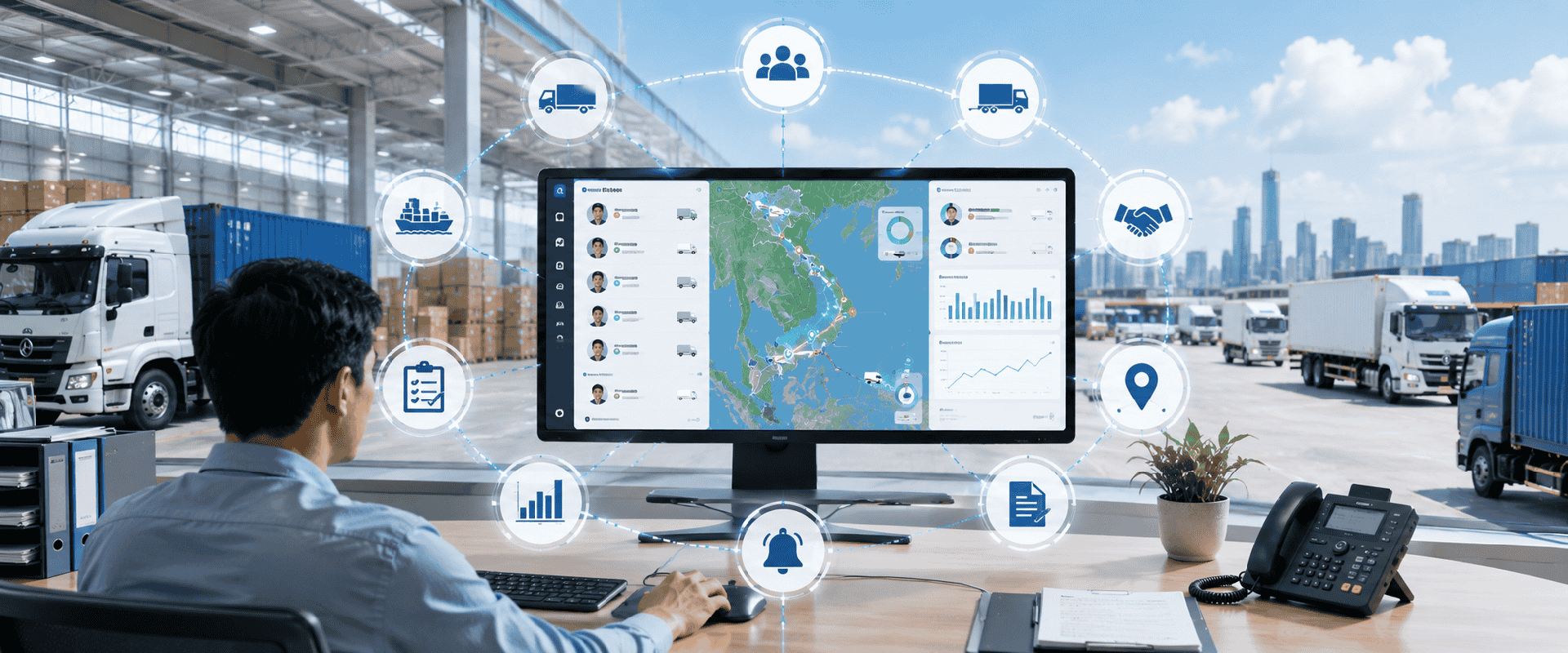
5. Strategic value the software delivers to transportation enterprises
Integrating a professional technological solution into operations helps businesses realize long-term growth objectives:
- Optimization of labor costs: Reduces manual processing time for the dispatch and HR departments by 30%. Driver utilization productivity increases thanks to intelligent dispatch workflows.
- Enhancement of Customer Satisfaction Indexes (SLA): Tight control over driver status helps minimize delayed trips and incorrect delivery routing, thereby protecting the enterprise's brand reputation in the market.
- Transparency of governance data: All data regarding driver performance and subcontractor trip history is stored centrally, supporting precise management report extraction for the board of directors at any given time.
Conclusion
Effective driver management via transportation software is not merely a matter of human control, but the art of optimizing supply chain workflows. A robust transportation system must operate on a solid digital technology platform where all information regarding personnel, vehicles, and partners is transparently displayed. Investing in professional transportation management software is the strategic step that helps businesses break through and master their competitive edge in the digital era.