Imagine a Monday morning at the dispatch office: phones ringing constantly from shippers asking about container locations, debt collection emails from agents flooding in, and on the desk is a towering stack of bills of lading (B/L) waiting for manual data entry. Just a small typing error, and the business could pay the price with massive demurrage fees or the loss of trust from long-term partners.
In an era where delivery speed is measured in hours and data transparency is "black gold," manual management or using fragmented software is like driving an old truck on a digital highway. That is why logistics ERP was born. So, what is logistics ERP and why is it a "lifesaver" for today's transport businesses? Let's find out the details in the article below.
1. What is logistics ERP? The most accurate definition
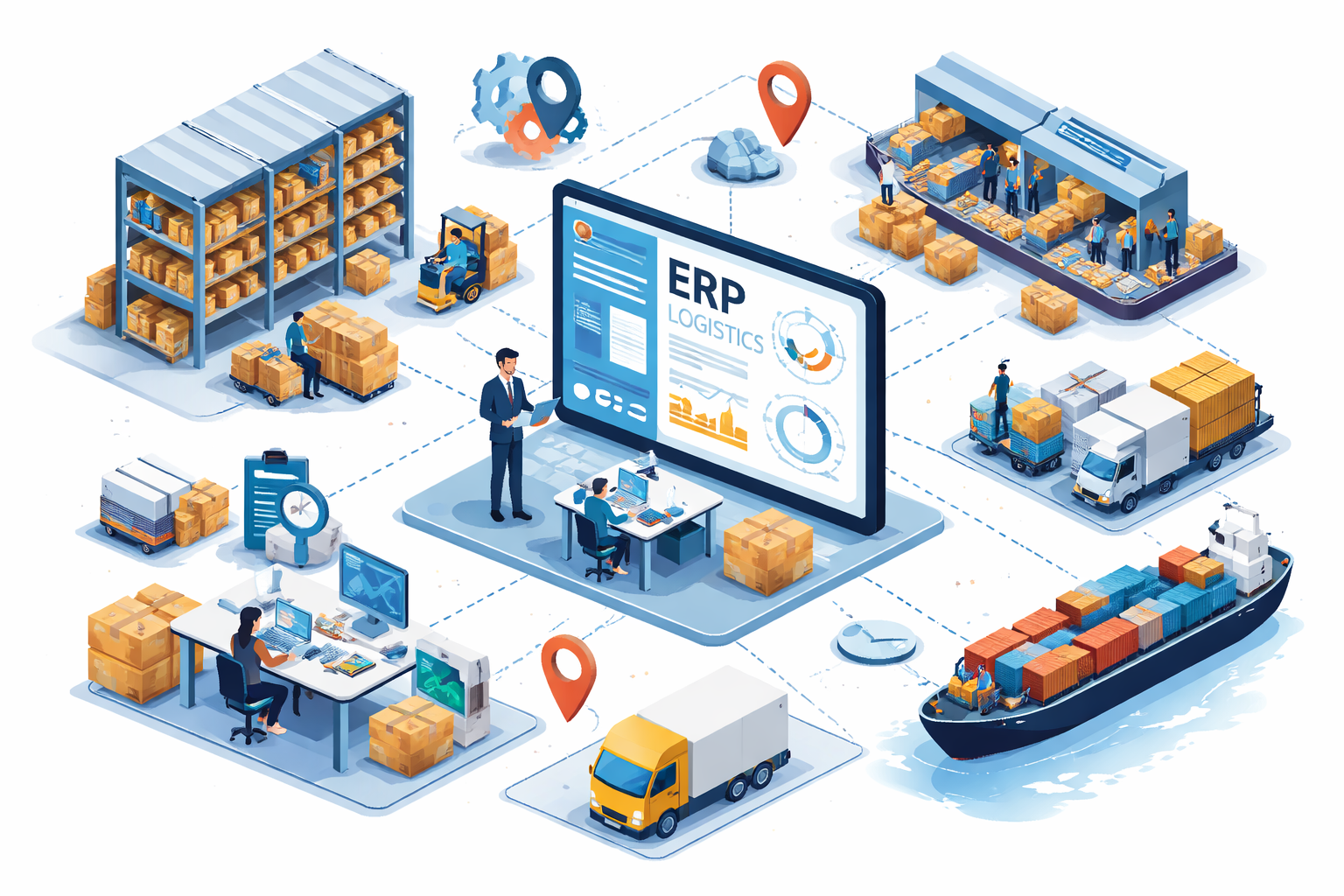
ERP (enterprise resource planning) in the logistics industry is not merely accounting or warehouse software. It is an enterprise resource planning system "tailor-made" for the specifics of the supply chain and transportation.
To put it simply, logistics ERP is a centralized data ecosystem that connects every link: from quotations, booking, bill of lading (B/L) management, vehicle dispatching, and customs declaration to financial accounting. Instead of data being "trapped" in separate Excel files, ERP brings everything onto a single platform, allowing managers to view the entire business picture in real time.
2. Why do transport businesses need logistics ERP today?
The transport industry is facing three major pressures: rising operating costs, strict customer requirements, and competition from international corporations. Logistics ERP solves these problems through:
- Data centralization: Eliminating the "each department has its own data" situation. Shipment information from the OPS department is immediately inherited by accounting to issue debit notes, without the need for manual re-entry.
- Cost optimization: The system helps strictly control costs incurred for each shipment (costing), thereby minimizing losses and unnecessary hidden costs.
- Enhancing staff productivity: Automating repetitive tasks gives employees more time to care for customers instead of burying their heads in piles of documents.
- Data-driven decision-making: With a smart reporting system, business owners know exactly which routes are losing money and which customers bring the highest profit to adjust strategies in a timely manner.
3. Core features of a modern logistics ERP system
A specialized ERP solution for transport must possess specific modules:
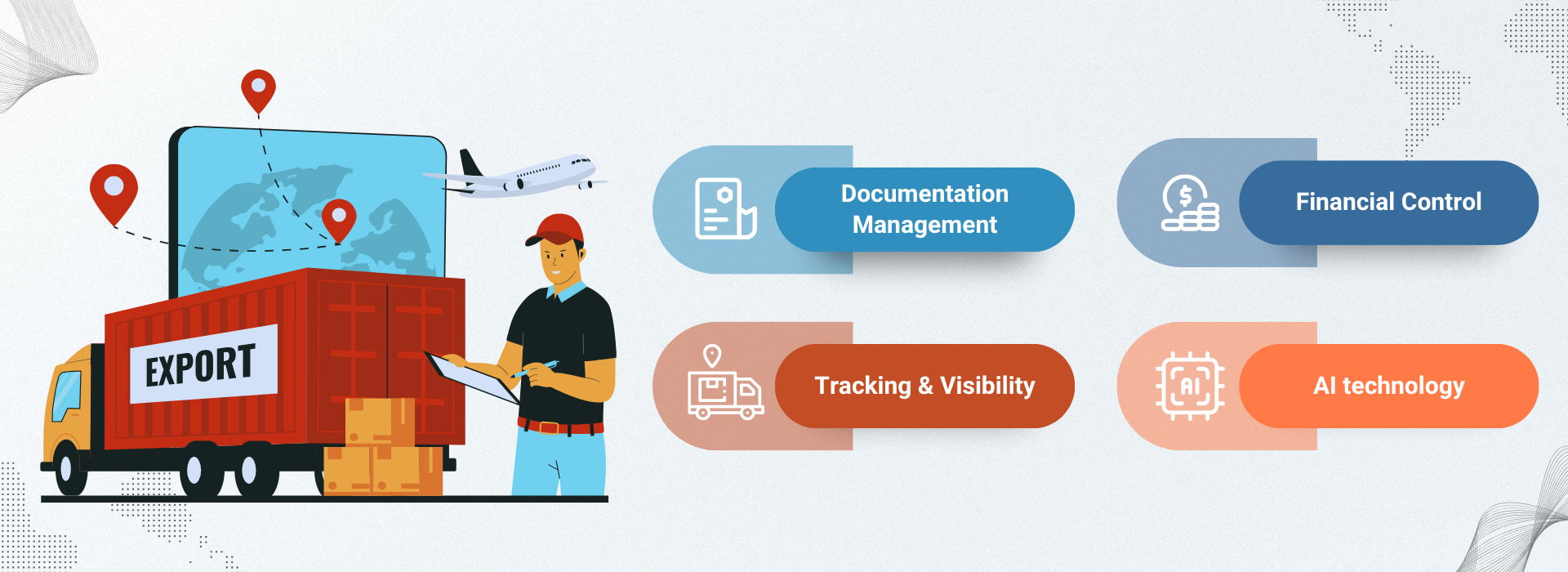
Documentation management
This is the "heart" of logistics. The system must support diverse management from House B/L and Master B/L to specialized documents for air (AWB), road transport, and customs declaration.
Shipment financial control
Control cash flow by automatically generating debit notes/credit notes and tracking agent and customer debts. This feature helps businesses avoid missing invoices or exchange rate confusion in international transactions.
Tracking and visibility
Update order status in real time to respond to customers quickly, helping increase the customer satisfaction score (CSAT).
Automation with AI technology (2026 trend)
Advanced systems today have integrated AI OCR to automatically read data from shipping line or customer PDF files, making job creation take only a few seconds instead of tens of minutes as before.
Expert insight: Digital transformation in logistics is not about buying a new computer, but about changing operations with a smarter solution.
4. Sota FMS: a comprehensive logistics ERP solution from Sota Solutions
If you are looking for a true "digital assistant" for your business, Sota FMS (freight management system) is the answer. Developed by a team of experts at Sota Solutions, Sota FMS is not just software, but an international standard logistics management process perfectly localized for the Vietnam market.
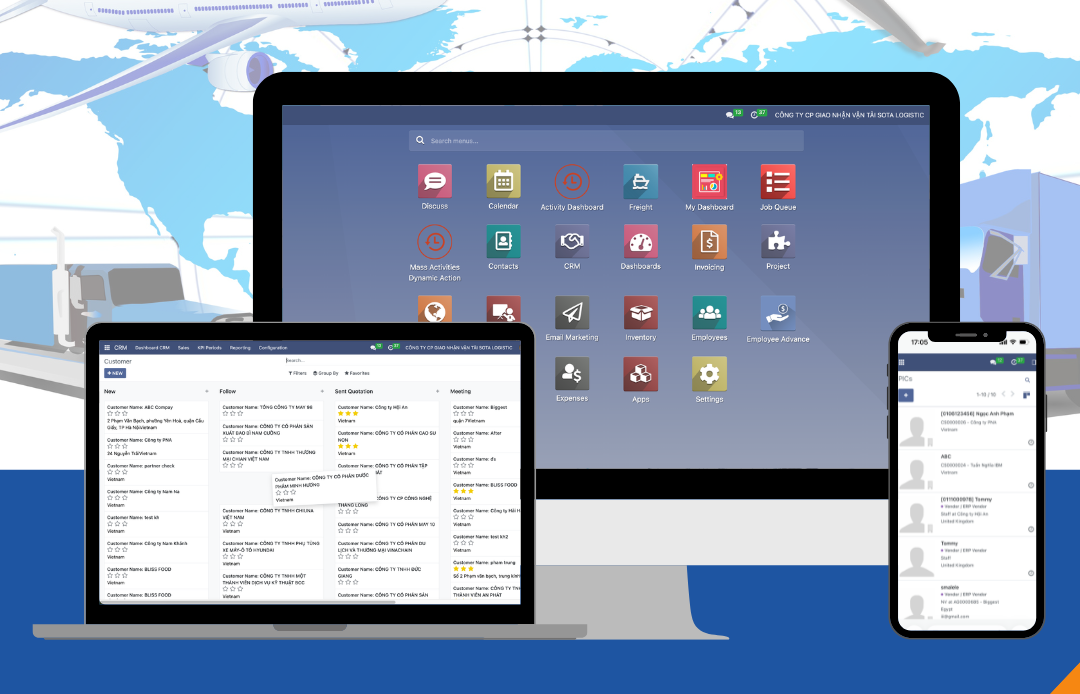
The differences that create the power of Sota FMS:
- Breakthrough with AI OCR technology: Sota FMS possesses the ability to automate data reading from bookings and bills of lading. The system will automatically extract information and fill it directly into jobs, helping to reduce manual entry errors by 90%.
- Comprehensive multi-modal management: Whether your business is strong in sea, air, customs declaration, or cross-border transport, Sota FMS has specialized modules to meet your needs.
- Strict control of House B/L and Master B/L: The system allows for document lifecycle management from issuance to storage, ensuring absolute legality and accuracy.
- Real-time profit reporting: A special feature of Sota FMS is the ability to aggregate revenue and costs for each shipment. Managers can view profit and loss (P&L) reports as soon as a shipment ends without waiting until the end of the month.
- Flexible support for international operations: Easily manage prepaid and postpaid fees and reconcile debts with international agents in various currencies.
Learn more about Sota FMS - the optimal solution for your logistics business
5. Roadmap for successful logistics ERP implementation for businesses
ERP implementation is a journey, not a destination. To succeed, businesses should keep the following in mind:
- Identify actual needs: do not choose the most expensive software; choose the one that best fits your scale and operations.
- Standardize processes: before moving everything to the computer, the actual workflow must be clear.
- Choose a companion partner: a company like Sota Solutions not only provides software but also consults on a systematic digital transformation roadmap, helping your employees get used to the system as quickly as possible.
- Human resource training: the human factor determines 50% of the success or failure of an ERP project.
6. Future logistics ERP trends: AI and cloud
In the next few years, logistics ERP will shift strongly toward cloud platforms so that employees can work anytime, anywhere. Besides, integrating AI to forecast market demand and optimize transport routes will become a mandatory standard.
With the companionship of Sota FMS, Vietnamese transport businesses can confidently compete on equal terms with global "giants" thanks to a solid technological foundation.
Conclusion
Logistics ERP is no longer a strange concept but has become a vital "weapon" for every transport business in the digital era. Investing in a system like Sota FMS from Sota Solutions today is an investment in the sustainable future of the business.
Do not let your business get stuck in outdated processes. Let technology lead your shipments further.
Are you ready to elevate your business with Sota FMS? 👉 Contact Sota Solutions now for a consultation and free solution demo!
Hopefully, this article has helped you clearly understand what logistics ERP is and find the right solution for yourself. Do not forget to follow our blog to update the latest knowledge about the logistics industry!